Siding Replacement in Tuttle, OK
Siding replacement is the right move when your home's exterior is cracked, warped, rotting, or so faded and dated that repairs no longer make sense, and Frontier Siding Solutions handles it from first inspection to final trim for homeowners in Tuttle, OK. Our crews install vinyl, fiber cement, James Hardie, and board and batten siding on site-built houses and mobile homes. We also help with insurance claims after storm damage and offer financing.
This page covers when siding needs replacing, how the main materials compare, what drives cost, and how insurance and financing work. That should help you decide before you schedule a free estimate. If you are still comparing options, you can also browse our full range of home siding services in Tuttle.
When does siding need to be replaced?
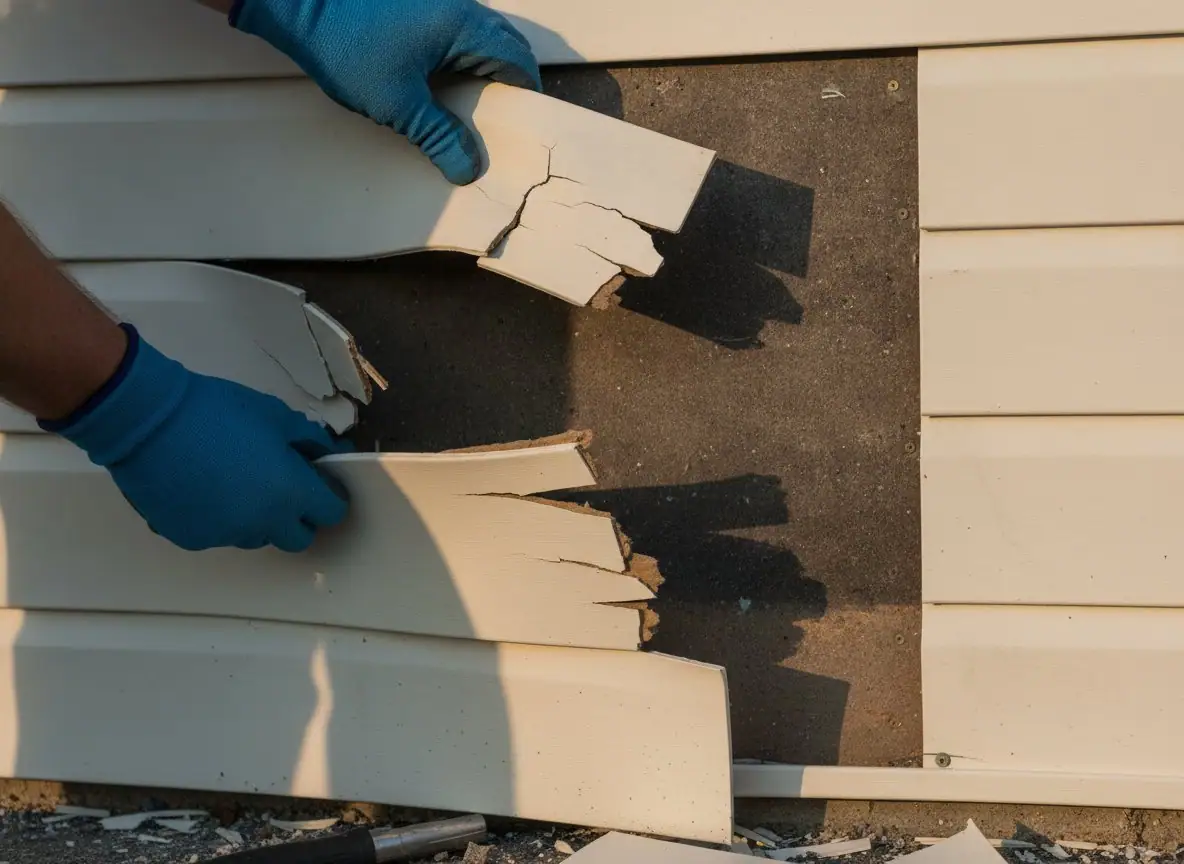
Siding needs replacement when the damage is widespread, moisture is getting behind the panels, or the material has reached the end of its useful life. Small, isolated problems can often be fixed with siding repair. Hail, high wind, intense summer sun, and freeze-thaw cycles in central Oklahoma wear siding down faster than many homeowners expect.
Signs you need siding replacement
- Cracked, split, or holed panels across more than one wall, often after hail
- Warped, buckled, or wavy vinyl from heat or improper original installation
- Soft, spongy, or rotting wood and cedar boards, especially near the ground and around windows
- Peeling interior paint or water stains on interior walls behind exterior siding
- Mold, mildew, or swelling at seams and joints
- Loose or missing pieces that keep blowing off in storms
- Heavy fading or chalking that cleaning does not remove
- Rising energy bills along with drafty exterior walls
- Discontinued colors or profiles that make matching patches impossible
Read moreShow less
Repair usually makes sense when a few boards are damaged and the rest are sound. Replacement makes sense when problems show up on several elevations, the sheathing underneath is wet, or patched areas would stand out. Once you know you need new siding, the next decision is which material to choose.
At a glance
What is the best type of siding to use on a house?
No single siding is best for every house. Vinyl gives the lowest upfront cost and the least maintenance. Fiber cement, including James Hardie, gives the best durability and fire resistance. Board and batten is the right choice when you want a vertical, farmhouse-style look. Replacement materials range from budget-friendly vinyl to engineered wood and fiber cement, and the right pick depends on your budget, how long you plan to stay, and the style of the home.
| Material | Strengths | Trade-offs | Best fit |
|---|---|---|---|
| Vinyl | Lowest material cost, no painting, wide color range, lightweight, quick to install | Can crack in hail or warp from reflected heat; less rigid look | Budget-conscious replacements, rentals, mobile homes |
| Fiber cement | Resists fire, rot, and insects; holds up well to hail and wind; convincing wood look | Heavier, more labor to install, needs periodic repainting | Long-term homeowners who want durability |
| James Hardie | A widely recognized fiber cement brand with factory-finish color options and many profiles | Higher cost than vinyl; installation is specific to the product | Homeowners who want a name-brand fiber cement product |
| Board and batten | Vertical, modern farmhouse style; available in vinyl or fiber cement | More trim detail; cost depends on the base material | Accent walls, gables, or a full style update |
For general reference, online pricing guides list per-piece material prices of roughly $5.61 to $13.49 for vinyl and about $15.28 to $56.98 for engineered wood and fiber cement. These are material-only figures. They do not include labor, trim, wrap, or disposal, and they are not Frontier Siding Solutions quotes. Prices change often, so check current local pricing before relying on them. Many homeowners compare materials, local material pricing, and several contractor estimates side by side. That comparison usually raises a question: if you have vinyl now, what are people switching to?
Free, no-obligation estimates
Talk to Frontier Siding Solutions
Tell us what you need and we’ll take it from there.
What are people replacing vinyl siding with?
People replacing vinyl siding most often choose fiber cement, especially James Hardie, or upgrade to a newer, thicker vinyl. Some combine either material with board and batten accents. Homeowners who move away from vinyl usually want better hail resistance, a more solid feel, and a look closer to painted wood.
- Vinyl to vinyl: Changing vinyl siding to a newer profile with insulated backing or a thicker panel is the most affordable update. It also keeps maintenance low.
- Vinyl to fiber cement: This swap is the most popular durability upgrade. It needs a full tear-off and a properly prepared wall.
- Mixed materials: Horizontal lap siding on the main walls with vertical board and batten on gables or entry areas adds curb appeal without the cost of a full premium package.
Homes with older wood or cedar face a different set of choices, because the old material and the condition of the wall underneath change how the job is done.
How do you replace old wood or cedar siding with vinyl or fiber cement?
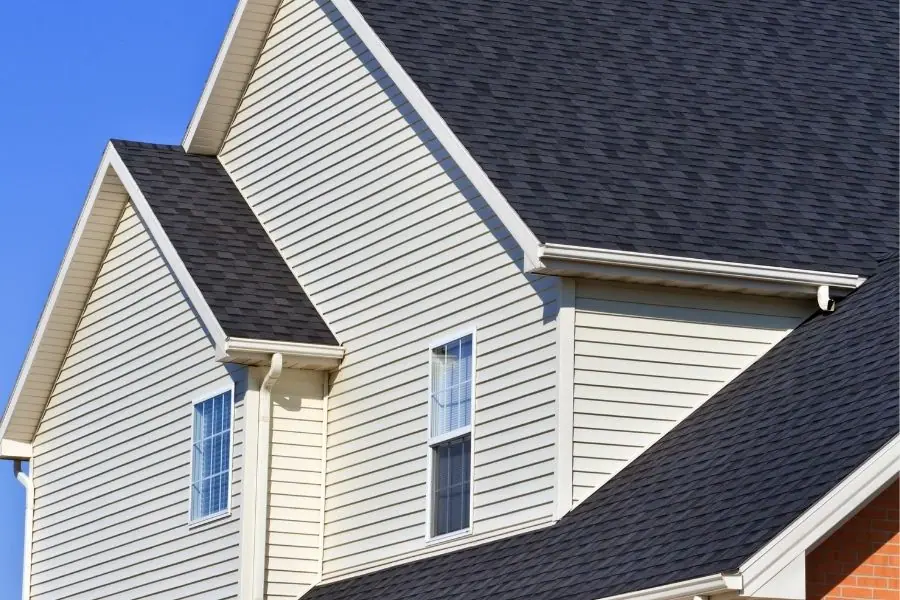
To replace wood or cedar siding with vinyl or fiber cement, the old boards are removed, the sheathing is inspected and repaired, a weather-resistant barrier is installed, and the new siding and trim are attached. Covering rotted wood traps moisture, so a full tear-off is usually the right approach when you replace wood siding on a house.
Our replacement process
- Free inspection: We check every elevation, probe for soft wood, and look for water entry around windows, doors, and rooflines.
- Material selection: We walk you through vinyl, fiber cement, James Hardie, and board and batten options and give you a written quote.
- Site protection: We cover landscaping, AC units, and walkways and set up debris containment.
- Tear-off: We remove the old cedar, wood, or vinyl, along with damaged trim.
- Sheathing repair: We replace rotted or water-damaged sheathing before anything new goes on.
- House wrap and flashing: We install a weather-resistant barrier and flash windows, doors, and penetrations.
- Siding and trim installation: We install the new siding to the manufacturer's specifications, with proper nailing and clearances.
- Cleanup and walkthrough: We remove debris, sweep for nails, and review the finished work with you.
Read moreShow less
When you replace cedar siding with fiber cement, the wall has to be flat and solid, because fiber cement is rigid and shows unevenness. Vinyl is more forgiving, but it still needs a sound, dry wall. Many cedar homes also have vertical sections, which leads to a common question about that style.
What is the siding called that goes vertical?
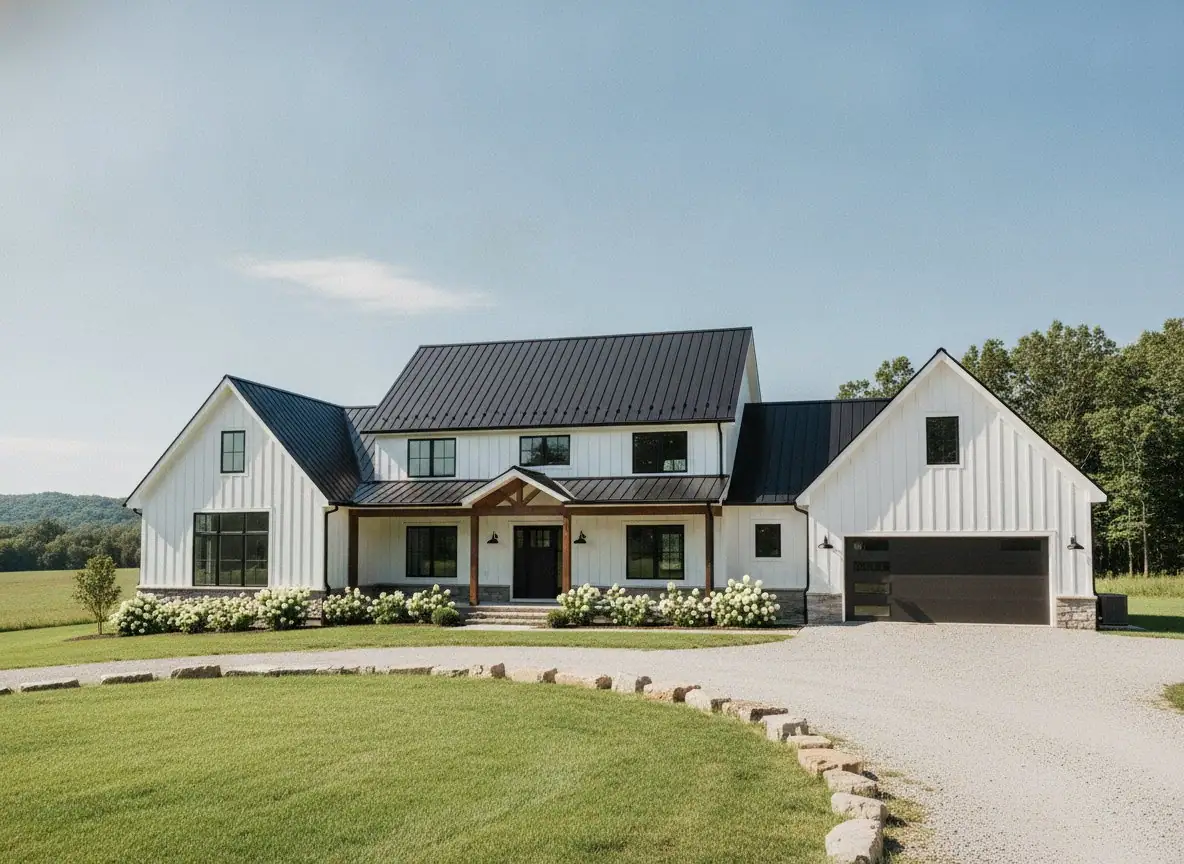
Vertical siding is most commonly called board and batten. Wide boards run up and down, and narrow strips called battens cover the seams. Related vertical styles include reverse board and batten and vertical panel siding.
Board and batten is available in vinyl and fiber cement. We install it as full-house siding or as an accent on gables, porches, and dormers. Vertical lines can make a single-story home look taller, and they suit the farmhouse and ranch styles common around Tuttle. Installation needs blocking or furring behind the panels so there is solid nailing at the right intervals. That makes wall preparation important. Wall preparation matters even more on manufactured housing, which has its own installation rules.
How to install vinyl siding on a mobile home?
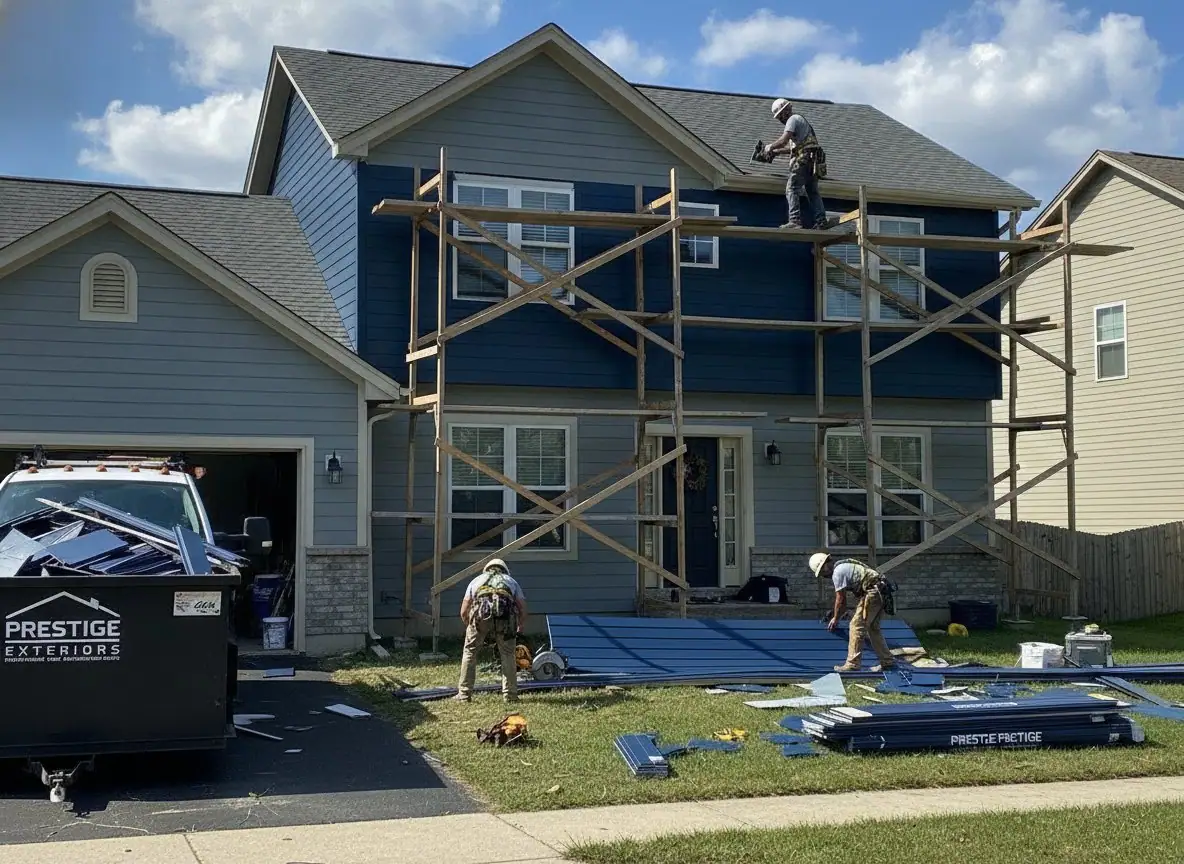
Vinyl siding for mobile homes is installed by removing the old metal or vinyl panels, checking the wall studs and sheathing, adding a moisture barrier, and attaching panels that fit the home's wall height and framing. Manufactured homes often have thinner walls, nonstandard stud spacing, and different trim details than site-built houses.
Mobile home siding considerations
- Wall framing: Studs may not sit at standard spacing, so we confirm nailing points before installation.
- Furring strips: Uneven walls may need strips to create a flat, nailable surface.
- Panel orientation: Horizontal vinyl is most common. Vertical panels or board and batten can also work.
- Skirting tie-in: The siding bottom edge has to coordinate with skirting so water drains away from the frame.
- Window and door trim: Many mobile homes need J-channel and trim adapted to their window frames.
Read moreShow less
Mobile home siding is often a good candidate for full vinyl replacement replacement because it is lightweight and affordable. Sometimes, though, only a few panels are damaged, which raises the question of single-piece costs.
How much does it cost to replace a piece of siding?
The cost to replace a single piece of siding depends mainly on the material, whether a matching piece is still available, and how much of the surrounding siding has to come off to reach it. A small patch can cost more per piece than a full wall, because setup, trip, and labor time are spread over very little material.
- Matching: Discontinued vinyl colors or faded existing panels can mean a visible patch.
- Access: Second-story pieces or areas behind gutters, AC units, or decks take more time.
- Hidden damage: Rotted sheathing behind the piece adds repair work.
- Material type: Fiber cement needs cutting, priming, and painting, while vinyl locks into place.
After a free inspection, we tell you whether a repair or a full replacement makes more financial sense. When several walls are involved, it helps to understand what drives the price of a full project.
At a glance
How much does siding replacement cost in Tuttle, OK?
Siding replacement cost in Tuttle depends on the size of your home, the material you choose, how difficult the walls are to reach, and how much damage is hidden under the old siding. Frontier Siding Solutions provides a written quote after a free inspection. For a deeper breakdown, see our guide to siding replacement cost in Tuttle.
| Cost factor | How it affects the price |
|---|---|
| Home size and wall area | More square footage means more material and labor. |
| Material choice | Vinyl costs least. Fiber cement and James Hardie cost more for material and installation. |
| Style and trim detail | Board and batten, corners, gables, and window trim add labor. |
| Height, pitch, and access | Two-story walls, steep gables, and tight lot lines need extra equipment and time. |
| Tear-off and disposal | Removing one or more old layers adds labor and dumpster costs. |
| Sheathing and rot repair | Damage found during tear-off has to be fixed before new siding goes on. |
| Permits | Any required permits or inspections add to the total. |
| Extent of damage | Storm damage across multiple elevations increases scope. |
Many homeowners are not paying the full amount out of pocket, especially after hail or wind damage. That is why insurance and financing are worth understanding before you sign.
Does insurance cover siding replacement, and is financing available?
Homeowners insurance often covers siding replacement when sudden damage, such as hail, wind, or a falling limb, causes the problem. It typically does not cover wear, age, or neglect. Financing is available through Frontier Siding Solutions for costs insurance does not cover, or for homeowners who are upgrading by choice.
Insurance claim help
- We inspect and document storm damage on every elevation.
- We provide information you can share with your adjuster.
- We can be present for the adjuster's inspection if you want.
- We explain matching issues when undamaged walls would no longer match repaired ones.
Your policy terms, deductible, and adjuster decide what is covered. We help you through the process but cannot guarantee a claim outcome. For active damage, such as a wall left open after a storm, we offer 24/7 emergency service to help protect your home.
Read moreShow less
Financing
Financing lets you spread the cost of replacement over time, cover your insurance deductible, or move up to fiber cement instead of settling for a lower-cost material. Ask about current options during your free estimate. With coverage and payment sorted out, the last step is choosing the right contractor.
How do I choose a siding replacement company in Tuttle?
Choose a siding replacement company that inspects in person, puts the quote in writing, explains material options plainly, carries insurance, and can help with storm claims. Look for a contractor who installs several materials, so the recommendation fits your home rather than whatever product the contractor happens to sell.
- Ask for an itemized written estimate that covers tear-off, sheathing repair, wrap, trim, and cleanup.
- Confirm the company is insured.
- Ask how hidden rot will be handled and priced.
- Compare at least two or three contractor estimates for the same material.
- Ask whether permits will be pulled if they are required.
Frontier Siding Solutions is insured and handles new siding installation, replacement, repair, inspection, and maintenance for homes and businesses in Tuttle. We install vinyl, fiber cement siding installation, James Hardie, and board and batten. Below are answers to the questions we hear most often.
FAQ
Frequently asked questions
What is the new trend for siding?
Current trends include board and batten accents, mixed horizontal and vertical layouts, darker colors such as charcoal and deep green, and fiber cement products with a painted-wood look. Many homeowners pair lap siding on the main walls with vertical siding on gables.
How long does siding replacement take?
Timing depends on the size of the home, the material, weather, and how much sheathing repair is needed. Vinyl generally goes up faster than fiber cement. We give you an expected schedule with your written quote.
Can I replace just one side of my house?
Yes. One elevation can be replaced when the damage is limited to that wall. The main concern is matching color and profile with the remaining siding, which can be difficult if the existing siding has faded or been discontinued.
Do I need a permit to replace siding in Tuttle?
Permit requirements depend on local rules and the scope of the work. Check with the City of Tuttle before work begins. We can go over permit needs during your estimate.
Can I put new vinyl siding over old vinyl siding?
We generally do not recommend it. Layering hides moisture damage, can create an uneven surface, and makes window and door trim harder to finish properly. A tear-off lets us inspect and repair the wall first.
What financing options are available?
Frontier Siding Solutions offers financing for siding replacement. Terms depend on your situation, so ask for details during your free estimate.
Ready to find out whether your siding needs repair or replacement? Call Frontier Siding Solutions at (405) 342-8409 to schedule a free inspection in Tuttle, or reach us through our contact page.
Why choose us
Why choose Frontier Siding Solutions?
Free estimates
Get a clear, no-obligation estimate before any work begins.
Licensed & insured
Your property and our crew are protected on every project.
Residential & commercial
One team for homes, multi-family and commercial properties.
Locally owned & operated
A local team serving your community and the surrounding area.
Get in touch
Find siding help near you
Request a free estimate online or give us a call — our team will follow up quickly.
- Call us(405) 342-8409
- Visit4215 Sambar St, Tuttle, OK 73089
- HoursMonday- Sunday: 7 AM- 7PM